 Available in GB
Content
- What to check before you rely on an e-cheque option
- How deposits and withdrawals can differ
- Comparing payment routes without a named casino list
- Check the cashier, account currency and payment limits
- What a deposit minimum can tell you
- A quick check for payment-method availability
- Keep deposit and payout details consistent
- Allow for casino approval before a withdrawal arrives
- Protect your account and set a limit before depositing
- Use a payment route you can verify
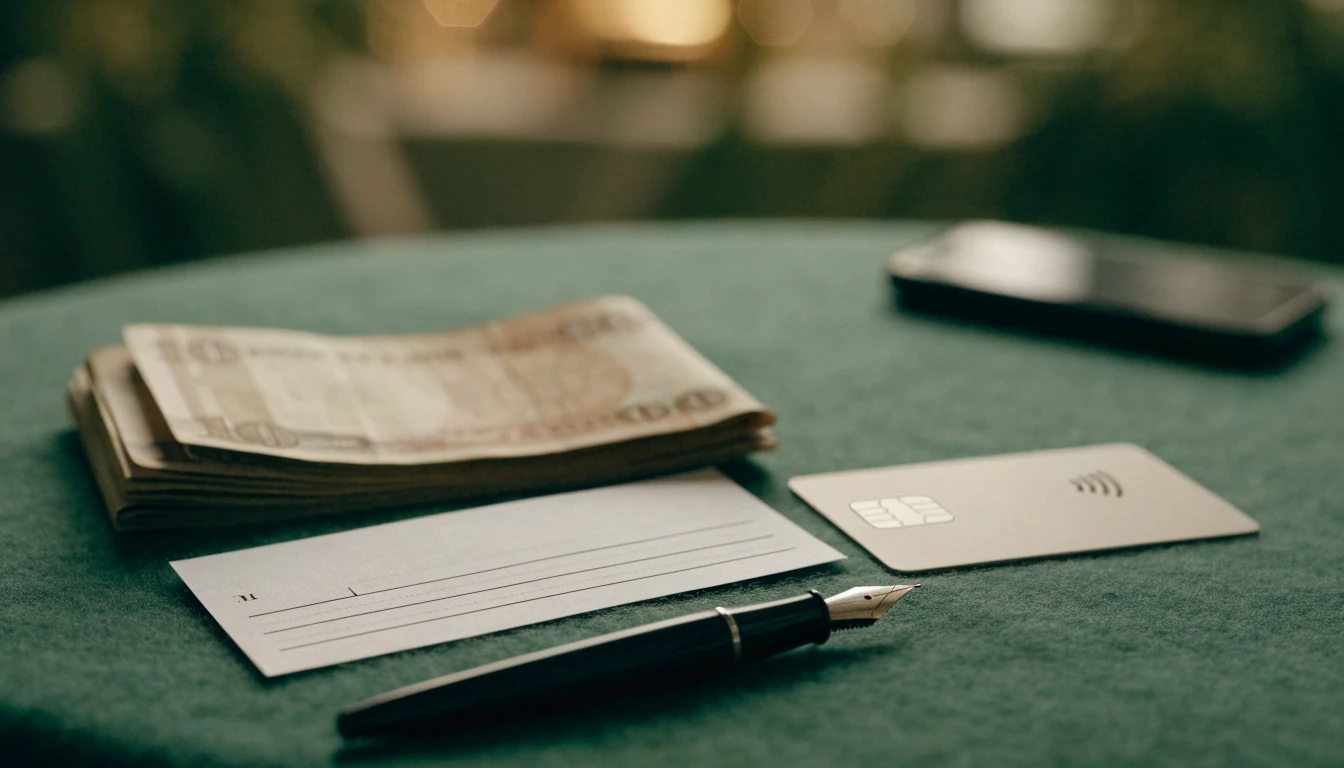
E-cheque availability can vary by account, so the cashier is a more practical check than a general payment list or an old review.
What to check before you rely on an e-cheque option
Do not assume an e-cheque will work simply because a casino accepts online payments. Check the cashier after signing in and look for e-cheque as an available deposit method. A general payment list, an old review or a logo on a page is not the same as an option you can select for your own account.
That matters if you are comparing casinos that accept e-cheques in the UK. A site may describe several ways to pay without offering every method to every customer. Payment menus can also change. The cashier is the practical check: it shows what the operator currently makes available to you, rather than what you might expect from a broad description.
I would treat claims about e-cheque support as something to verify, not as a reason on their own to choose a casino. If the option is absent from the cashier, do not assume that a similarly named bank service or a general “bank payment” label means the same thing. If the wording is unclear, ask the operator to identify the method and confirm whether it is available for deposits before you proceed.
Check the actual payment option
Take a moment to read the cashier’s labels carefully. A method might be described by a provider name or under a broader payment category, so look for a clear match rather than guessing. If you cannot tell whether the displayed option is an e-cheque, ask customer support before entering payment details.
The same care applies to lists elsewhere on a casino site. Payment pages can be general, while the cashier is tied to the account you are using. An option shown in a general overview may not appear when you sign in. Conversely, a cashier may show a method that is not prominent on an information page. Check the route you intend to use, not just the wording that first caught your eye.
This is not a reason to treat every unfamiliar payment label as suspicious. It is simply a reason to establish what the operator means before you send money. Keep the answer clear: is this specifically an e-cheque deposit option, and can you select it in your cashier? If support gives a vague reply, wait until the payment route is clear.
Casinos that accept Ethereum in the UK: what to check
One specialist payment overview lists Visa and Mastercard among the methods discussed for casino payments, but that does not establish that either card product is available to you at a particular site. Check the cashier for current availability and eligibility. In the UK, credit-card payments for gambling are prohibited; do not try to route a credit card through another payment service to get around that restriction. A payment label is not permission to use an ineligible card.
Age checks come before a deposit
There is another step that comes before funding any gambling account: the operator must verify your age before allowing you to deposit. For a UK player, real-money online gambling is for adults aged 18 and over at sites holding the relevant UK Gambling Commission licence. Do not expect an e-cheque, or any other payment route, to bypass that requirement.
You may be asked to provide information or documents as part of KYC. Complete the operator’s checks honestly and use your own details. If the account cannot be verified, a payment method being visible in the cashier does not remove that problem. The order is straightforward: establish that the site is appropriate for UK play, complete the required checks, then consider whether the intended payment option is actually available.
I would also avoid sending money while a basic point remains unresolved. Confirm that the casino is licensed to serve the British market, that you are using the operator’s genuine website and account area, and that the cashier names the payment method you mean to use. Those checks are less exciting than a list of supposed top e-cheque casinos, but they are more useful than relying on a list that cannot show what your account can select.
A careful check need not become a long investigation. Sign in, open the cashier, inspect the deposit options and clarify any ambiguous label with support. If e-cheque is not clearly offered, choose only a different method that is both eligible and explicitly available to you—or pause. No guesswork.
Verify Payment Option
- Sign in to your casino account
- Open the cashier to check for e-cheque in the deposit menu
- Confirm the operator’s license for the UK market
- Complete all required KYC age and identity checks
- Clarify any ambiguous payment labels with customer support
Top online casinos in the UK
- Revery PlayBonus: 100% up to€1,000+ 100 FS · Payout speed: 1-3 business days
- BeOnBetBonus: 100% up to €500 + 100 FS · Payout speed: 1-3 business days
- JetsetspinsBonus: 200% Bonus + 100 Free Spins + Free Royal Wheel · Payout speed: 1-3 business days
- SpinFormulaBonus: 550% Up To £15,000 + 550 FS · Payout speed: 1-3 business days
- BritsinoBonus: Welcome Package – Get your £2,200 + 2,000 FS · Payout speed: 1-3 business days
- EvoSpinBonus: 125% up to €2500 + 125 Free Spins · Payout speed: 1-3 business days
- WinBeastBonus: €5000 + 500 FS + €650 Freebet · Payout speed: 1-3 business days
- ZombillionBonus: Welcome Pack 250% up to £4000 + 200 FS · Payout speed: 1-3 business days
- NightWinBonus: £900 + 400 free spins · Payout speed: 1-3 business days
- AmunbetBonus: Join now and get 450% up to 2,700 GBP + 450 FS · Payout speed: 1-3 business days
How deposits and withdrawals can differ
A payment method can appear on a casino’s deposit screen without being available for withdrawals. Those are separate transactions, and the rules shown for one direction do not automatically answer what happens in the other. If you are considering an e-cheque at a UK casino, check how the site treats both deposits and payouts before you rely on that route.
The distinction matters because a deposit is money moving into your gambling account, while a withdrawal is a request to send funds back out. The cashier may show a method for adding money, but the casino may handle withdrawals through a different route. That does not necessarily mean there is a problem; it means the two functions need checking separately.
I would look for clear wording in the cashier or payment terms: can this method be selected to deposit, can it be selected to withdraw, and are there conditions on returning money? A logo or method name beside the deposit button answers only the first question. Treating it as proof of a complete in-and-out option is an easy mistake.
Why the return route may be different
UK anti-money laundering rules generally require casino payouts to go back to the original payment source. Returning funds that way is also a common anti-fraud control. So when a payment method is used for a deposit, the casino may expect a withdrawal to follow the same route, rather than allowing you to choose any destination you prefer.
Casinos That Accept Entropay in the UK
That principle can affect what you see when you request a payout. The original method may be available, or the cashier may direct you through another route under its payment process. If an alternative is needed, the casino may ask for additional verification. That is a reason to understand the payout route before depositing, not just when you are ready to withdraw.
An e-cheque option can therefore raise two separate questions: whether the casino accepts it for deposits, and whether a payout can be returned through it under the casino’s process. A positive answer to the first does not establish the second. Nor should you assume that a method called an e-cheque works the same way across different casinos or payment services.
Check both sides of the cashier
Before making a deposit, open the cashier and inspect the available choices for depositing and withdrawing. If withdrawal options are only shown after signing in or completing account checks, read the payment terms as well. Look for any wording about original-source returns, alternative payment routes, or extra verification where a return to the original source is not possible.
If the information is unclear, ask the casino’s support team a direct question: “Can I withdraw funds through this method, or is it deposit-only?” For an e-cheque, name the exact option displayed in your cashier rather than relying on a general description. Keep the reply and any relevant terms so you can refer back to what you were told.
This is not the same as asking how quickly a withdrawal will arrive. First establish whether the route can be used at all; timing comes after that. A method might be accepted for deposits while a payout follows the original-source process or needs another verified route. Those are compatibility questions, not promises about speed.
Do
- Inspect both deposit and withdrawal options in the cashier
- Read payment terms for original-source return rules
- Ask support if a method is deposit-only or allows withdrawals
Don’t
- Assume a deposit logo proves the method works for payouts
- Interpret silence in the terms as permission to use any route
- Guess how the casino will route a payout from multiple methods
It is also worth checking what happens if you have deposited through more than one method. The casino may need to apply its payment rules across those transactions, and a withdrawal request may not simply let you nominate whichever destination is most convenient. Don’t guess how the casino will divide or route a payout: ask how its process works for your account.
Make the decision before money is in play
For someone comparing e-cheque casino options in the UK, a useful check is whether the cashier describes the method for both directions, not merely whether its name appears somewhere on the site. If the deposit route is clear but the withdrawal route is not, treat that as an unanswered practical point. You can pause and get clarification before sending money.
I would avoid interpreting silence as permission. A payment page may be designed mainly to take deposits, while payout arrangements are explained elsewhere. The relevant detail is the casino’s actual process for returning funds, including whether the original source must be used and whether an alternative could involve further checks.
Once you have confirmed the route, keep the transaction records and follow the instructions shown by the casino. If a withdrawal is later queried, having a clear record of the method used and the information you received can help you explain what happened. It will not remove the casino’s checks, but it gives you a sensible starting point.
The short version: a deposit option is not automatically a withdrawal option. Check both directions, understand the original-source rule, and settle any uncertainty before you deposit. That small check can prevent an awkward surprise when you want your money back.
Casinos That Accept Tether in the UK: What to Check
Comparing payment routes without a named casino list
A “best” e-cheque casino is not simply the one with the payment method in its cashier. The useful comparison is what the route will cost you and whether its terms suit the way you intend to pay. A label alone tells you little about the total cost.
I would not rank casinos by an e-cheque claim without first checking the cashier. Payment options can be specific to an account, and a list that names a casino does not tell you what you will see when you sign in. For a fair comparison, start with the payment routes actually displayed to you, then look at their charges and the amount you expect to move.
There is no single payment method that is cheapest in every case. A specialist payment review makes the same point: the total can include a casino charge, a fee from the payment provider, a charge from your bank or card issuer, currency conversion, and network costs. Some of these are obvious before you confirm a transaction; others may be buried in the rate or provider terms. Compare the whole route, not just the most visible line.
That matters when a route appears to have no flat fee. A conversion spread—the difference between the exchange rate applied and a reference rate—can cost more than a stated fixed charge, as one specialist payment review notes. So “no fee” is not the same as “no cost”. If a payment passes through a service that converts currency, check the rate as well as any separately listed charge. Otherwise, you could focus on a small fee and miss the larger part of the cost.
Attention: A "no fee" label is not the same as "no cost," as currency conversion spreads can cost more than a stated fixed charge.
For an apples-to-apples comparison, use the same intended transaction amount for each route and add up the charges that apply to it. Check whether the casino lists a fee, whether the provider or bank may charge separately, and whether conversion or network costs are involved. Do not assume that a charge shown by one party covers the others. A route can look inexpensive at the casino end while still costing you elsewhere.
If you are comparing an e-cheque with a card, bank transfer or e-wallet, keep the comparison practical. Note the costs you can confirm, and mark any charge or exchange rate you cannot establish before proceeding. Do not fill that gap with a guess. If you cannot tell what the total will be, it is not yet a meaningful price comparison.
The same discipline helps when you read a recommendation calling one option the best. Ask what “best” means in that recommendation: lowest stated fee, simplest checkout, or a lower overall cost after conversion and provider charges? Those are different measures. A route that wins on one may not win on another, and the result can depend on the transaction amount and the fees attached to your own payment route.
Mobile access does not change the arithmetic. A cashier that is easy to use on a phone may save effort, but that does not establish that the payment route costs less. Compare the charges shown before you confirm, rather than treating a smooth mobile checkout as proof of value. Convenient is not the same as cheap.
Casinos That Accept MuchBetter in the UK: What to Check
I also avoid treating a broad “best” label as a substitute for the details. Look for a clear breakdown of fees and conversion, and compare like with like. If one route has a visible flat charge and another has a rate-based cost, put both into the same total before deciding. The rate-based cost can be less obvious on screen, but it still belongs in the comparison.
A sensible shortlist is therefore about routes and costs, not a league table of casino names. First identify what is available in the cashier; then compare the casino, provider, bank, exchange and network charges that apply to the amount you plan to use. If the total remains unclear, pause rather than choosing on a “free” badge or a confident ranking. Small print has a way of becoming the main event.
Check the cashier, account currency and payment limits
Payment details can differ between casino accounts, so a general description is no substitute for what appears in your own cashier. That matters if you are looking for an e-cheque deposit: a payment method mentioned in a review is not proof that it is available to you, or that the terms are the same for every customer. Check the options shown after signing in, before you commit to a transaction.
Currency is worth checking at the same time. One specialist casino review lists GBP as supported, but that does not establish the account currency offered to every player at every casino. Look for the currency attached to your account and confirm it before making your first deposit. If the account is set to another currency, a payment can involve conversion rather than a straightforward GBP transaction. Don’t assume the amount you enter will be handled in pounds just because you are using a UK-facing site.
Account currency and payment limits are set at the account level; a general review of GBP support does not guarantee the same currency or limits for every player.
I’d check the cashier’s currency details alongside the payment method, not as an afterthought. If the method is listed but the account currency is unclear, read the payment information or contact the operator before proceeding. The point is not to guess what the cashier will do; it is to know which currency the account will use and whether the route you intend to take is actually offered for that account.
Deposit limits need the same account-level check. Maximum amounts can vary by payment method and account status, and a casino may set separate caps for an individual transaction, a day or a month. A limit quoted for one route should not be carried over to another. Nor should you assume that a figure shown in a general review will still apply to your account when you make a deposit.
In the cashier, look for the minimum and maximum permitted for the selected method, along with any account-level notice that affects the amount you can deposit. If the cashier displays a limit only after you choose a payment route, select the route first and read the terms before entering payment details. If a limit is not clear, ask the operator to confirm it rather than relying on a guess. That is especially sensible when an e-cheque option is part of what you are checking: confirm the amount allowed for that method on your account, rather than assuming it follows the limits shown for cards or bank transfers.
Casinos that accept Boku in the UK: what to know
Keep the different limits distinct. A per-transaction cap concerns one payment; daily and monthly caps apply across a broader period. The cashier or the operator’s payment information should make clear which kind of limit is being shown. If you are unsure whether a figure is a method limit or an account limit, ask before depositing. It is a small check that can prevent a payment being declined because the amount does not fit the terms in force for you.
The practical order is simple: confirm the currency, choose the intended payment method, then check the limits displayed for that method and account. A review can help you know what to look for, but your signed-in cashier is the place to verify your own terms. No guesswork needed.
What a deposit minimum can tell you
A low minimum can make a payment route seem like an easy starting point, but it does not tell you whether that route is available for e-cheque deposits. The figure is tied to the payment method and the casino’s displayed terms, not to the label “e-cheque” in a general guide.
A specialist review gives a broad starting range of £10–£20 for minimum deposits, with the amount varying by payment method. Treat that as orientation, not a promise about a particular cashier. It is not an e-cheque-specific minimum, and it does not establish that any named casino accepts e-cheques.
When you are checking an e-cheque option, look at the cashier after signing in and read the terms shown for that route. If the method is listed, check the minimum beside it before deciding how much to deposit. If it is not listed, a figure quoted elsewhere cannot make it available. Cashier terms win.
Understanding Deposit Minimums
A deposit minimum is the smallest transaction an operator will accept through a specific route. It is tied to the payment method and the casino’s live cashier terms, not to general guides or other payment options.
The minimum is simply the smallest transaction the operator will accept through that route. It does not tell you whether the method suits your needs, nor does it establish that the same terms apply to every payment option. A casino may display different entry amounts for different methods. So a minimum you saw in a review, or on a page describing another route, is not a reliable substitute for the live cashier.
This matters if you are comparing e-cheque casinos and trying to identify a “best” option from deposit size alone. A smaller minimum may be relevant to your budget, but it is only one detail to verify. It does not prove that e-cheques are supported, and it says nothing by itself about how the payment will be handled.
Keep the check simple: find the payment method in your own cashier, read its stated minimum, and use that figure when deciding whether to proceed. If the displayed amount differs from a review, rely on the cashier’s current terms rather than assuming the review is still accurate. Payment pages can change; old figures tend to linger.
A minimum is useful, then, as a practical threshold for a specific route—not as evidence that an e-cheque option exists or as a measure of which casino is best. Check the method first, then the amount. No guesswork needed.
A quick check for payment-method availability
A list of payment brands can look reassuring, but it only tells you what that list actually names. A specialist review of casino payment information mentions Visa, Mastercard, bank transfer, e-wallets and several cryptocurrencies. It does not establish that any particular UK casino accepts e-cheques.
Casinos That Accept Neteller in the UK: What to Check
That distinction matters if you are trying to find a suitable e-cheque casino. A broad label such as “bank transfer” is not confirmation of an e-cheque facility: the terms may refer to a different payment route, and a category name does not show which services an operator supports. Nor does a list of e-wallets prove that an e-cheque is available through one of them.
I would treat a published payment-method roundup as a starting point, not as a confirmed directory. It can show the kinds of methods that appear in casino payment information, but it cannot support a named e-cheque casino list unless it specifically identifies the casino and the option. A payment brand appearing somewhere in a review is not enough to establish that every casino covered accepts it.
The same caution applies to older or general descriptions. Payment pages can change, and a method mentioned in one review may not be presented for every customer or account. If a page does not clearly name e-cheques as an available method, do not read that into a neighbouring label or assume the option is hidden under a broader category.
Keep the conclusion narrow: Visa, Mastercard, bank transfers, e-wallets and cryptocurrencies are payment categories noted in specialist coverage. That is evidence about what the coverage discusses, not proof of e-cheque acceptance at a specific operator. It also does not establish that e-cheques are unavailable everywhere. It simply cannot settle the question on its own.
For a reliable answer, look for an explicit e-cheque entry tied to the casino you are considering, rather than relying on a general list of payment types. If the wording is unclear, ask the operator to identify the exact method before you proceed. No guesswork needed.
Credit Card Prohibition
In the UK, credit-card payments for gambling are prohibited; do not attempt to route a credit card through another payment service to bypass this restriction.
Keep deposit and payout details consistent
Before you make a deposit, check that the casino account and the payment account are both in your own name. It sounds basic, but mismatched details can turn a routine transaction into extra questions. Using your own account and a payment route registered to you reduces the chance that ownership checks will cause avoidable friction.
I’d keep to one named payment account for deposits and withdrawals where the casino allows it. That gives the casino a clearer trail: the same customer is funding the account and receiving the payout. Switching between someone else’s account, a shared payment method or different named accounts can make that picture less straightforward.
This matters if you are considering an e-cheque casino payment in the UK, but it does not establish that any particular casino accepts e-cheques. First make sure the cashier offers the route for your account; then check that the payment account is yours and that its details match your casino profile. A method appearing on a general payments page is not a substitute for confirming the details you will actually use.
UK anti-money laundering controls commonly require winnings to go back to the original payment source. If the casino cannot return funds that way, another route may involve additional verification. Keeping your details aligned from the start can help avoid that ownership-related snag.
There is no need to make the payment trail complicated. Use a named account you control, keep your casino profile accurate, and avoid depositing through another person’s details even if they have offered to help. A straightforward trail is easier to explain if the casino asks you to confirm who owns the account.
Casinos That Accept USDC in the UK: What to Check
One account, one clear trail.
Allow for casino approval before a withdrawal arrives
Once you request a payout, the money does not necessarily leave the casino straight away. There is an internal approval stage, and the time taken can depend on the operator’s process and whether your account has been fully verified. A payment method that feels quick for a deposit tells you little about how soon a withdrawal will reach you.
A specialist review describes first withdrawals as potentially taking longer while verification is completed. Treat that as a reason to check your account status early, not as a guaranteed timetable: the operator still has to review the request, and processing can differ between casinos. If KYC is outstanding, the casino may need documents or other checks before it approves the payout.
I would look at the cashier or withdrawal terms before relying on a stated processing estimate. Check whether the casino distinguishes its own approval time from the time taken by the payment provider or bank after release. Those are separate stages. “Processed” may mean the casino has approved and sent the funds, not that they have appeared in your account.
An e-cheque label, if one is shown to you, does not remove the casino’s approval step. Nor does it establish when funds will arrive. The relevant details are the operator’s current withdrawal terms and the status shown against your own request.
Handling First Payouts
Check Account Status
Ensure all KYC verification and documents are completed to avoid payout delays.
Request Withdrawal
Submit the payout request and monitor the status in your account.
Verify Approval
Distinguish between the casino’s internal approval time and the payment provider’s processing time.
Contact Support
Use official channels if the payout remains pending beyond the stated terms.
If the first payout is taking longer than expected, check whether the casino has asked you to complete verification and whether the request is still awaiting approval. Keep any messages and follow the operator’s stated contact route if the status is unclear. A little patience may be needed. Don’t mistake a deposit confirmation for a payout promise.
Protect your account and set a limit before depositing
Before you put money into a UK gambling account, take a moment to decide what you can afford to spend. That choice is separate from whether an e-cheque appears in the cashier: a payment method does not set a sensible boundary for you.
Remote gambling operators must prompt new customers to set a financial limit before their first deposit. They must also make account-level limit controls accessible. You should be able to find those controls in your account, rather than having to hunt through payment screens or rely on a cashier prompt.
I would set a limit before choosing a deposit route. Think about the amount you can lose without affecting bills, savings or other commitments, then enter a figure you can stick to. A limit is a guardrail, not extra spending money. If you find yourself wanting to raise it in the moment, pause instead of treating the change as routine.
Once your account is open, check where the controls sit and what they let you manage. Make sure you can return to them without starting a deposit. If the option is hard to find, or you cannot tell what limit is active, contact the operator before funding the account. Clear controls matter more than a polished payment menu.
This is worth doing even when you have already decided which casino and payment route to use. The limit applies to your gambling account, not just to one transaction or one payment method. It gives you a way to keep your spending in view as you play.
Casinos That Accept Interac in the UK: What to Check
If you are comparing casinos that accept e-cheques in the UK, treat the financial controls as part of the basic account check. A cashier can show what the operator accepts; the account settings should help you decide what you are willing to spend. Set the boundary first. Then decide whether to deposit at all.
Use a payment route you can verify
Before you send money, make sure the payment account is yours and that you can access it. The name and other account details should match the details you gave the casino. A mismatch can lead to questions or hold up a transaction; using somebody else’s account is not a sensible workaround.
Then check the cashier while signed in. A general payment page or an old review may describe options that are not available to your account now. If you are considering an e-cheque, look for that exact option in the deposit cashier and read the terms shown there. Do not assume that a similar-sounding bank service, cheque facility or transfer route is the same thing.
There is a separate check for payouts. UK anti-money laundering rules generally mean winnings are returned to the original payment source. If the cashier explains that another route may be needed, read what verification it requires before depositing. The payment method’s name alone does not tell you how the casino will handle a withdrawal.
I would also pause if the cashier does not make clear who the payment provider is, what account details are needed, or whether the route is intended for gambling transactions. A payment button appearing on a page is not enough; you need to know what you are authorising and which account will be involved. Keep any confirmation so you can check the transaction against your bank or payment account later.
For a UK player, the practical test is simple: the account belongs to you, the cashier shows the intended route for your own transaction, and the terms make sense before you confirm. If one part is unclear, ask the casino through its official support channel rather than sending funds and hoping the details sort themselves out. Better to stop at the cashier than untangle an avoidable payment problem afterwards.
What is the fastest withdrawal method for UK casinos?
PayPal, open banking and debit cards linked to fast payout systems are generally among the quickest options. Your withdrawal may still take longer if the casino needs to approve it or verify your account.
Which payment methods are accepted in Great Britain?
UK casinos commonly accept debit cards such as Visa and Mastercard, and some also offer PayPal, open banking, bank transfers, Paysafecard, Skrill or Neteller. The options available to you vary by casino, so check its cashier.
Can I use a credit card at 333 Casino in Great Britain?
No. Credit-card gambling is prohibited in the UK, so you must use an eligible alternative payment method.
Is Skrill available?
Yes, Skrill is offered at some UK-friendly casino sites, though availability varies and it may not qualify for promotions. Check the casino cashier for current options.